Wednesday, November 30, 2022

Shadows (1959)


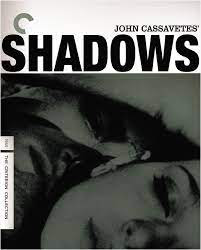
Shadows, the debut film by actor/director John Cassavetes, is considered a landmark in American independent cinema, Cassavetes was on the vanguard New York filmmakers during the 1960s fashioning an alternative to Hollywood movies. 

The moody black and white atmosphere of the film follows a collage of characters shifting between aimlessness and ennui in the city. Propelled by Jazz music and the Beat Movement, they shuffle along the fringes of intellectual and artistic life. 

A sad love story shapes the narrative of Shadows. Complexities of race and identity are also woven into the film. Lelia (Lelia Goldini) lives with her two brothers Hugh (Hugh Hurd) a jazz singer and Ben (Ben Carruthers) an aspiring writer. Leila is uncertain about what she wants in life and worries about falling behind and aspires to attend college. At a literary party she meets aspiring intellectual Tony (Anthony Ray) who seduces her, but then bails on the relationship for racist reasons.

Cassavetes famously worked out the framework of Shadows through improvisation exercises with the cast. Technical and logistical setbacks extended the shooting of the film, additional scenes were also shot after the premiere was poorly received. 

While the improvisational approach feels awkward at first, as the film unfolds the line between fiction and non-fiction blur. By the end, the documentary effect is vivid.

Shadows would cast a wide legacy in the coming decades, especially on New Hollywood filmmakers. Scorsese and Altman immediately come to mind. The realist and film noir style can also find in the French New Wave, especially in Godard's 1960 film Breathless. Cassavetes and Godard set their films in urban environments and relied on character instead of narrative to shape the style.  

Monday, November 28, 2022

Wild Strawberries (1957)


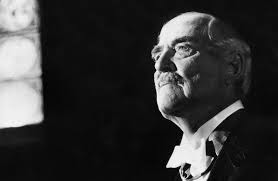
In some ways the inverse of Frank Capra's It's A Wonderful life (although both sort of end up at the same place), Ingmar Bergman's Wild Strawberries follows Professor Isak Borg (Victor Sjostrom) as he journeys to accept a lifetime achievement award. Aging and near the end of his days, he reflects on the regrets of his life during the trip while interacting with fellow travelers along the way. Kurosawa's Ikiru deals with similar subject matter, but takes a more sociological approach to mortality, avoiding the troubled theology of Bergman, yet both films never fail to put one in a reflective state of mind, regardless of age.

Western culture romanticizes youth as the time to do everything and have lots of fun. Possibilities look endless at age 21, yet for anyone who's 21, that can be both exciting and daunting. We never know the consequences of our decisions until we have the benefit of looking back with hindsight. In the film, septuagenarian Professor Borg is asking questions like: What kind of person was I? What were my mistakes? Why did I not learn from them? Why am I full of regret?

In dream sequences, Isak relives moments of unrequited love and scenes from his unhappy marriage. His wife came to despise him and carried on affairs. The present and past are merging in some ways. Accompanying him on the trip is his daughter-in-law Marianne (Ingrid Thulin) who grows to have a grudging respect for Isak and even confides in him about her own issues with his melancholy son Evaid (Gunnar Bjornstrand), also a doctor.

Mortality, a recurring theme in many Bergman films, is looked at from a variety of perspectives here. Evaid is chronically depressed and despairs of his own existence, even walking out on Marianne after she reveals she's pregnant because he has no wish to bring a child into the world. A touch of despair is infecting all the characters. 

Along the way they pick up three young hitchhikers. The two men in the group debate the existence of God and even come to blows and compete for the affection of their female companion. Later, they encounter a bickering middle aged couple, a shadow of Isak's own marriage. 

Bergman is expressing a harsh truth: Regrets are inevitable as we age. Despite Isak's successful career as a doctor and scientist, his personal life has been a disaster resulting in grief and loneliness in his old age. Questions of whether he would've been happier with this person or had devoted more time to his family no longer matter. Approaching 40 when he wrote the film, Berman was musing on whether the "What ifs?" will consume us as the end nears. I suppose so, and there's really no way around it except by how one chooses to deal with it.

"Arid" is word that keeps popping up lately. Those with a religious perspective often use the term to describe the secular worldview, but it goes both ways. One of the hitchhikers wants to be a clergyman, an ambition his companions find quaint. Preaching a theology in a world of rapid social and technological change, informed by a catastrophic century simply offers a solution among many, at worst a pitiful nostalgia for a past that never existed. Turning to conventional religion ultimately involves not leaps of faith, but flights of fancy. 

Wild Strawberries resolves itself by, to quote Lincoln, turning to the "mystic chords of memory." The professor thinks back to moments of his childhood to assuage his regrets and fears. Many poets have offered a similar prescription to despair, but few films have expressed the notion in such a brave and unvarnished way. 
Monday, October 31, 2022

H22 #29: The Birds (1963)


The creeping sense of dread in Alfred Hitchcock's The Birds combined with its surreal siege narrative remains an uncanny cinematic experience. Hitchcock's apocalyptic adaptation of the Daphne du Maurier short story still gets under the skin. Anytime I catch site of a murder of crows flying overhead I feel some trepidation.

Tippi Hedren stars as socialite Melanie Daniels. The film begins with Melanie meeting Mitch (Rod Taylor) at a pet store. They banter about birds and their exchange is mildly flirtatious, leading Melanie to track him down at Bodega Bay. The first half the movie plays as a high brow melodrama with the various romantic intrigues at the idyllic seashore community. A sense of malaise and frustration serves as a foreshadowing of the terror to come. Interspersed throughout are signs our feathered friends are acting strangely.

Hitchcock's mastery is on full display during the attack scenes, done without music and only the high- pitched bird squawks. They find ways into houses, swoop down in large numbers on children playing in a schoolyard, each attack is an escalation. In my favorite scene at the diner, locals express their fears about what's going on, when a bird expert points out humans live at the mercy birds who outnumber them by the billions. In other words, nothing can stop them.

Many saw Cold War parallels, the birds a stand in for the threat of nuclear war. The helplessness of everyone in such an attack is captured with brilliantly by Hitchcock. Nature is a big theme as well, mocking all human pretensions with sheer power. An otherworldly grimness certainly takes over in the last 20 minutes. Other films have trod similar ground such as Luis Bunuel's The Exterminating Angel or Lars Von Trier's Melancholia. The Birds in representing a rebellion by nature, forces the audience to grasp an arcane possibility. 

An overblown melodrama for the first hour transforming into an outright horror spectacle is Hitchcock once again playing the audience with one grim joke after another.  


Sunday, October 30, 2022

H22 #28: Near Dark (1987)


Kathryn Bigelow's Near Dark showcases her kinetic style and preference for characters who live on the extremes - in this case vampires. 

When Caleb (Adrian Pasdar) has a brief romance with Mae (Jenny Wright), she not only converts him to vampirism but also introduces him to her hellraising band of the undead. The Aliens reunion is a treat for movie fans including Bill Paxton, Lance Henricksen, and Jenette Goldstein. Paxton is at his most unhinged. These vampires are unlike any other to appear on the screen, a band of outlaws taking no prisoners. 

Shot throughout Arizona and Oklahoma, Bigelow paints a visceral portrait with the landscapes. A perfect synthesis of the horror-Western with shootouts worthy of Peckinpah.

H22 #27: Zodiac (2007)


David Fincher's Zodiac is a tour de force procedural told through the haze of 1970s discontent and bureaucratic inertia serving as a subterfuge for paranoia. A film bleeding with film history from Fritz Lang's M to the paranoid thrillers of Alan Pakula, Zodiac simmers in true crime obsession and harrowing encounters with the pursuit of the truth.

Zodiac is about the murders afflicting the Bay Area through the 1970s. Fincher is uninterested in criminal pathologies, and way more into how modern cities deal with a crisis. We follow detectives with the San Francisco Police department, principally Inspector Dave Toschi (Mark Ruffalo) and journalists for the San Francisco Chronicle, cartoonist Robert Graysmith (Jake Gyellenhaal and crime reporter Paul Avery (Robert Downey Jr). 

The narrative drive of Zodiac is among the best of 21st Century cinema. Fincher drew upon All the President's Men as a primary influence: The brightly lit newspaper offices are contrasted with the darkness of the street where the killer lurks, striking at random. David Shire who composed the score for many '70s movies including ATPM was brought in for Zodiac. While many previous novels and films have dealt with killers terrorizing a city, Zodiac explores how mass media adds to the sense of paranoia. Television news feeds off the tension and makes it worse, the killer knows how to manipulate the media to stoke mass panic. 

Fincher relents from going too far into exploitative territory. Three of the killings are recreated, the scenes focus on the randomness of the killings, which is frightening enough, but not on the gory details. Neither does the film obsess over the psychology of the killer, James Vanderbilt's script is more of a puzzle. Gyllenhaal plays Graysmith as an amateur sleuth, spending most of the film trying to decode the clues in the countless letters the killer sent, in what would form the basis of his 1986 book Zodiac.

Meanwhile, the detectives on the case continually run into jurisdiction issues, which led to clumsy evidence collecting and a poor pooling of resources. Ruffalo as Inspector Toschi persists with the case despite all the setbacks - to his own detriment. When the authorities finally finger a likely suspect played by John Carroll Lynch in an icy performance, they fail to attain enough evidence. RDJ as Avery was targeted with letters by the killers and his own idealism is slowly shattered as his own investigation hits brick walls.

Graysmith becomes the main protagonist of the story, Gyllenhaal plays him with the right amount of virtue and intelligence. In perhaps the creepiest scene he follows a lead and ends up in a scary basement with a shady man offering information. Chloe Sevigny plays Robert's long-suffering wife in a thankless role who eventually leaves him over his obsession with the case.

In interviews Fincher spoke about growing up in the Bay Area being terrified of the Zodiac killer as a kid, almost in the way one speaks of fictional characters like Michael Myers or Freddy Kreuger, so there's a personal touch running through the film. The film was smart enough to create a vivid sense of '70s verisimilitude without trying to make grand statements about the era which has all been said before. It's all there on the screen. 

In the end I find Zodiac to be an oddly optimistic film in its thesis that the truth is attainable, thus eschewing the sense of ineffectual doom of so many paranoid thrillers.

****


Thursday, October 27, 2022

H22 #26 The Amityville Horror (1979)

George Lutz (James Brolin) wields the cross against evil forces, a common image in '70s horror.

Based on the "true story" 1977 novel by Jan Anson and the countless urban legends to emerge from the Amityville Murders that occurred on November 13, 1974. The highly questionable saga of the Lutz family who moved into the Long Island house after the killing provided the material for the film.

Released in the summer of 1979, James Brolin and Margot Kidder starred as George and Kathy Lutz. I'm a fan of the film, in fact, it's one my favorite haunted house films. It pairs nicely with The Shining, even though the styles of both movies are different, they complement each other. While Kubrick's obsessions are on full display in The Shining, Amityville is all about middle class anxieties of the late 1970s.

These anxieties center around the purchasing a house. As many have noted, Stephen King and John Kenneth Muir of specific note, there are constant occurrences and dialogue revolving around money. George constantly complains about costs from groceries to the heating bill, while the IRS has questions about his business expenses. Kathy's brother loses a bunch of cash before his wedding. Owning a house brings many expenses and becomes an incessant source of tension. How can a nuclear family survive when burdened with taxes, rising energy costs, and stagflation?

Family decline was paralleled by organized religion's waning influence. With so much financial pressure many families still clung to the church for guidance and stability. Rod Steiger camps it up as Father Delaney. When he arrives to Christen the house, he's attacked by flies and later becomes seriously ill. Later when driving the breaks of his car go out, clearly the clergy are targets and unlike the priests in The Exorcist, are totally ineffectual against the supernatural.

Lastly, there's the fragile institution of marriage. It's of note, emphasized more in the book, that Kathy is divorced, and her kids are from a previous marriage, adding extra pressures on George who suddenly must take on a stepfather role. The divorce rate skyrocketed in the 1970s in part due to the gains of Second Wave Feminism. Changing gender roles are very much in the subtext, and the cultural debate over the meaning of marriage plays heavily into the Lutz story. 

The cocktail of horror goofiness and pop sociology in The Amityville Horror make it a staple of the Halloween season - and think twice before buying a fixer upper. Is anything more terrifying than bad plumbing?