Thursday, April 18, 2024

Civil War (2024)


Written and Directed by Alex Garland

Starring: Kirsten Dunst (Lee Smith); Wagner Moura (Joel); Cailee Spaeny (Jessie); Stephen McKinley Henderson (Sammy); Nick Offerman (President); Jesse Plemons (Militia Officer)

With a provocative trailer and a circulating map of an alternate United States of competing factions, Alex Garland's latest film Civil War arrived with a morbid curiosity. For what it is, Civil War offers some effective cinema, but its incoherence presents obstacles. 

The story follows a group of journalists including Kirsten Dunst as famed photojournalist Lee Smith, Joel who fearlessly goes into dangerous situations, Sammy as the wise veteran, and rookie reporter Jessie. The "Western Forces" are an alliance of California and Texas who are on the cusp of capturing Washington DC where a besieged "third-term President" is negotiating terms of surrender. The journalists hope to score an interview with the beleaguered President.

Right now, you may be saying, "Wait, What." The political background of the conflict is only revealed in vague asides. The war's been going on for so long, many soldiers are unsure of who or what they're even fighting for. There are paramilitaries and militias, while some fight for what's left of the regular army. Atrocities are committed by both sides which are sometimes shown in graphic detail. Jesse Plemons appears as a terrifying militia officer donning Elton John glasses.  

For some reviewers, the lack of a logical backstory displayed a failure of nerve from the filmmakers. There are no buzzwords like "Blue States" or "Red States", current events are never referenced. There's a reference to an "Antifa Massacre" without any context. The lack of political definitions did not bother me so much, even though the marketing was misleading. I'm not sure how audiences would react to such imagery. As a result, the film has not pitted audiences of differing political backgrounds against each other.

Nebulous politics aside, Civil War is more of a meta-war movie in the guise of haunted Americana. Full Metal Jacket and Children of Men come to mind, and also journalism themed movies like Salvador and Medium Cool which raised similar questions about ethics and media. The journalists in the film have completely removed themselves from politics, they just want to record the events. Kirsten Dunst explains to her protégé their job is to simply document, let others analyze and shape narratives.

The film climaxes with the violent attack on Washington D.C. as seen from the ground. Garland wants us to experience everything from the journalists viewpoint. We're not watching Battleship Potemkin, nor the trench run on the Death Star. Garland goes for gritty realism, but I was looking for more of a cynical edge in the style of John Carpenter, Escape From New York especially. 

With some casually talking about a permanent break between red and blue states, if anything Civil War is a warning about political violence and rhetoric surrounding it. No doubt, a Balkanized America would be a scary place, one where political affiliation could mean life or death. 

I suspect audiences going to see Civil War will be more perplexed than shocked. In time, it will be of interest to historians or film scholars as a cinematic experiment. Compelling on a visceral level, Civil War offers little by way of social commentary. 


Friday, April 12, 2024

Late Night With the Devil


Written and Directed by Cameron Cairnes and Colin Cairnes

Starring: David Dastmachian (Jack Delroy); Ingrid Torelli (Lily); Laura Gordon (Julie); Ian Bliss (Carmichael); Steve Mouzakis (Szandor); Rhys Auteri (Gus)

It's Halloween Night 1977 and fledgling talk show host Jack Delroy (David Dastmalchian) knows he must pull out all the stops if he's going to beat Johnny Carson during sweeps month. Thus, the premise of Late Night With the Devil, a playful conjuring of 1970s horror and pop culture.

The found footage premise purports to show the infamous episode in its entirety. Among Delroy's guests will be a medium, a skeptic, and a parapsychologist with teenage girl "Lily" in tow who escaped a Satanist cult and claims to be possessed by a demon. 

Dastmalchian really nails the bland talk show host persona of the era, just as the production design flawlessly replicates the aesthetics of 1970s gabfests. The film opens with a documentary on Jack's backstory. Initially, his unassuming hip style made him a challenger to Carson, but his personal issues led to a decline in ratings, hence the big Halloween show.

Things quickly begin to go haywire as supernatural events begin to happen on the set. At first, the phenomena appear staged and innocuous - until things get sinister for real. There's a hypnotism scene that's especially effective. In the wake of The Exorcist phenomenon, television latched on to demonic possession as a ratings bonanza, and the film skillfully channels the satanic panic mania taking over corners of the culture.

The script is also well versed in the mythology of late night television. First, there's the idea of late night being a zone where TV could let its hair down, push the envelope of good taste. Steve Allen staged outrageous stunts and Jack Paar battled with censors. Carson's affable Midwestern persona masked his well-documented dark side. Jay Leno and David Letterman both broadcast their eccentricities to viewers every night. Dasmalchian hits all these discordant notes as Jack, the entire film subtly suggesting he's not who you think. Lastly, there's the put upon sidekick, ably played by Rhys Auteri as "Gus."

At around 90 minutes, Late Night with the Devil never overstays its welcome. Effective as a period piece and a horror movie, highly recommend. 


Friday, March 29, 2024

Logan's Run (1976)


Directed by Michael Anderson

Written by David Zelag Goodman (based on the novel by William F. Nolan & George Clayton Johnson)

Starring: Michael York; Richard Jordan; Jenny Agutter; Roscoe Lee Brown; Farrah Fawcett-Majors; Peter Ustinov

Logan's Run took the adage "Never Trust Anyone Under 30" and built a fictional scenario around it. Set in the 23rd Century after a series of catastrophes forced the survivors of humanity to live in geodesic domes controlled by computer overlords as humans to live in a hedonistic Utopia. But there's a catch - your life is terminated at age 30. 

The dome dwellers led to believe they will undergo a rebirth to a higher plain of existence on their
"Last Day." But not everyone is so sure. Some attempt to escape and the "Sandmen" are there to stop them. Michael York and Richard Jordan play two Sandmen, true believers in the system, and they pursue all "runners" with due diligence. The memorable opening sequence depicts the "Rite of Carrousel" as crowds gather for the spectacle of death. 

The production design resembles a mall, a consumerist paradise where everything one could want is readily available. By night, everyone can choose their preferred drug or sexual partner after a day of unending leisure. For fashion, everyone wears comfortable neon-colored pajamas! Thematically, Logan's Run shares much in common with Brave New World and The Time Machine, the latter due to futuristic society built on passivity and ignorance, and the former for vision of a civilization based on pleasure.

When Logan discovers a community of runners who believe there's a Sanctuary where people can live out the natural course of their lives, he deicides to investigate. Along with Jessica (Agutter), Logan sets out to escape the dome for the outside world. They discover a robot called "Box" who hunts food, including freezing escaped runners, shades of Soylent Green? Eventually they discover the ruins of Washington D.C. where they encounter a dim-witted old man played by Peter Ustinov. From that point on the film loses momentum and culminates with York delivering a comically dramatic speech about liberation. 

America was a youth driven society in 1976 with Boomers entering early adulthood. As the counterculture was fraying and a more self-centered ethos was taking hold, the film's skepticism about youthful wisdom foreshadowed the shift to Reagan and conservatism. I suppose the older segment of the population will always resent the young challenging values, just as the young will always feel constrained by elders asserting their values on them. The reactionary strain to Logan's Run is evident through its vision of an unenlightened youth incapable of independent thinking but is slightly tempered by the "kids are all right" ending.

A TV series followed that aired on CBS for one season. There's been countless attempts to reboot the franchise with many directors attached, but it's been in long-term stasis. I can see the concept working for a TV series, but I'd be curious to see a fresh vision of the story.

Wednesday, February 28, 2024

Judgement at Nuremberg (1961)


Directed by Stanley Kramer

Written by Abby Mann

Starring: Spencer Tracy; Burt Lancaster; Richard Widmark; Marlene Dietrich; Maximillian Schell; Judy Garland; Montgomery Clift; William Shatner

One of the event movies of the early 1960s, Judgement at Nuremberg dramatized the trial of Nazi civil servants before an Allied tribunal. One of the first major Hollywood productions to show graphic imagery from the Holocaust, the film also raised questions about American racism, Germany's complex geopolitical role in the Cold War, and whether an entire society is to be condemned for having knowledge of the crimes against humanity being perpetuated by its government. 

With an all-star cast led by Spencer Tracy, who plays Chief Judge Dan Haywood, few actors could evoke moral authority better than Tracy. Maximillian Schell turned in an Oscar winning performance as defense counsel Hans Rolfe, defending his clients on the grounds it was unfair to hold them responsible for Nazi atrocities when the entire world enabled the Third Reich. In his opening statement he pointed out American jurists like Oliver Wendell Holmes defended Eugenics programs, while not explicably stated the ingrained racism of American institutions. 

The year 1961 marked a high point in the Civil Rights Movement with Freedom Summer and the integration of the University of Mississippi. On the international front the trial of Adolf Eichmann in Israel brought the mentality and extent of Nazi atrocities, popularizing the term coined by Hannah Arendt. The world was just starting to come to terms with the Second World War, and the film situates itself in the era of rising public consciousness on these issues.  

Directed by Stanley Kramer who was known for making "message" movies like The Defiant Ones, Inherit the Wind, and Guess Who's Coming to Dinner, all serving as a barometer of mainstream liberalism. Judgement at Nuremberg may be his best film for the quality of the acting, writing, and weight of the history being presented. For millions of people, it would be the first time they would view raw footage from the death camps. In addition to archival footage, Kramer used rapid camera movements and compelling close ups, one of the most cinematic trial films.

Abby Martin's script was originally written for Playhouse 90 which aired in 1959 (with censorship required by the TV network), and indeed the high points of the movie are the monologues. Burt Lancaster is memorable as legal scholar Ernst Janning who was on trial, delivering a speech attempting to defend his actions, including forced sterilizations and handing out death sentences, because of Germany's diminished condition before Hitler. Haywood delivers his own eloquent speeches defending the idea of justice. Montgomery Clift appeared as a man who underwent forced sterilization and Judy Garland as a woman who transgressed racial laws are also both effective.

The issues raised in Judgment at Nuremberg remain consequential over sixty years later. To what extent should a nation's people be held accountable for atrocities committed by its government? With authoritarianism once again fueling politics across the globe, have we learned anything from the Second World War and the Holocaust? Now Western nations struggling with their own pasts of colonialism, slavery, and racism, issues which fuel contemporary political discourse on the left and right, what does reconciliation of past injustices look like?

On the Unclear and Present Danger podcast John Ganz observed that Hitler wounded so badly that many of today's issues can be traced back to him. From the persistence of Nazi iconography utilized by white supremacists to the ongoing war in Gaza, the past remains present. There's been countless studies of why societies turn on each other and give in to their basest instincts. The common argument is that Germany's economic distress and humiliation following the First World War set the stage for Hitler, but also a failure of the entire nation-state system. 

Despite being didactic at times with a hint of post-war American triumphalism, if you've not seen Judgement at Nuremberg, it remains an essential film.

(Currently streaming for free on Tubi and Amazon Prime)


Wednesday, January 24, 2024

Maestro **1/2


Directed by Bradley Cooper

Written by Bradley Cooper and Josh Singer

Starring: Bradley Cooper (Leonard Bernstein); Carey Mulligan (Felicia Bernstein); Maya Hawke (Jamie Bernstein)

Legendary conductor, composer, and educator Leonard Bernstein (1918-1990) led a fascinating life. As a champion of the arts, he left an indelible mark on 20th Century culture. Bradley Cooper's biopic is mostly focused on Bernstein's marriage to Felicia and his daughter Jamie. While the period flavor is well executed, especially in the first 45 minutes which were shot in crisp B&W, the muddled second half (in glossy color) loses direction. 

Before watching Maestro, I watched the 1998 PBS American Masters documentary Leonard Bernstein: Reaching for the Note, which focused more on his artistic accomplishments, while not ignoring his complicated personal life. The documentary also explored his commitment to Israel and his Jewish identity, featuring interviews with his family and collaborators. 

Cooper plays Bernstein as an artistic dynamo, charming everyone with his enthusiasm and brilliance. Infused with jazz and big band music of the era, his music brimmed with post-war confidence. His marriage to Felicia brought some stability, but his many affairs with men and women, he was openly bisexual within his social circle, made for a tumultuous private life. Much of the second half deals with Felicia's struggle with cancer, in a major tonal shift from the chipper first half. Mulligan is often reduced to playing the put upon wife with an undeserved tragic ending. 

Maestro ends on a disappointing note, leaving the viewer uncertain as to why Bernstein, who was such a towering figure, was so highly celebrated.  Barely any time is given to his collaborations on West Side Story and Candide, nor his involvement in politics. Bernstein's popular TV series Concerts for Young People, which brought music appreciation to a new generation, is also ignored. The famous evening when the Bernstein's hosted the Black Panthers at their luxury apartment, leading to backlash from the New York media and the famous hit piece "Radical Chic" written by Tom Wolfe who skewered the event for New York Magazine. Nor is the harassment he endured from the FBI ever explored. 

Cooper's script seemed more interested in telling more of an old-fashioned Hollywood tearjerker (with modern twists) similar to his 2018 remake of A Star is Born. Bernstein led a fascinating life and unfortunately Maestro left way too much out. 


Monday, January 22, 2024

I.S.S. ***


Directed by Gabriela Cowperthwaite

Written by Nick Shafir

Starring: Ariana Debose (Dr. Kira Foster); Chris Messina (Gordon Barrett); Joh Gallagher Jr. (Christian Campbell); Maria Mashkova (Weronica Vetrov); Costa Ronin (Nicholai Pulov); Pilou Asbaek (Alexy Pulov)

The Space Race began as an existential competition between the U.S. and U.S.S.R. but evolved into a means of cooperation between both countries. The Apollo-Soyuz Mission in 1975 symbolized détente, as a mutual respect developed between the competing Space Programs. Space serving as a means to take the edge of the Cold War would also be reflected in films like Marooned and 2010: The Year We Made Contact.

I.S.S. flips the premise in an ominous story reflecting the current international situation of the 2020s. The story begins with Dr. Kira Foster joining the Russian and American crews on the International Space Station.  As the newest crew member, she's introduced to the cramped quarters and strenuous living conditions by the American commander played by Chris Messina, who informs her learning how to sleep in zero gravity "sucks." 

In time Kira adjusts to the social dynamics between the crew which are comradery with occasional tensions, such as when a joke is taken the wrong way by the Russians. They also decide to never discuss politics to avoid arguments, especially regarding the War in Ukraine. Then without warning, they begin to witness a catastrophe playing out on the surface of the Earth that leads to the central conflict of the film.

I.S.S. is a warning of how conflicts can imperil personal relationships, leading people to abandon their humanity (or maybe find their humanity). Although the grim premise of the film detracts from the narrative going on at the space station, it does speak to the fraught state of world politics.

The cast and direction were both excellent, achieving an intimate realism that achieves the illusion of being aboard the space station. There are suspenseful sequences that recall Gravity, and even some resonant symbolic moments. A somber Sci-Fi movie to open the year, it certainly the reflects the mood going into 2024.


Thursday, December 7, 2023

Napoleon ***1/2 (2023)


Ridley Scott's Napoleon brings to the big screen one of history's most controversial figures, the Corsican Napoleon Bonaparte. Played with a pouty gusto by Joaquin Phoenix, Napoleon is more of a suggestive historical epic than a precise one. Impressive battle sequences and political intrigue are matched by scenes with the one figure who could level the emperor - the Empress Josephine played by Vanessa Kirby. 

Filmmakers have struggled to bring Napoleon's life to the big screen. Abel Gance's 1927 silent epic is considered the best by film scholars. Stanley Kubrick struggled for years to get his Napoleon project off the ground, but it was never meant to be. Earlier this year Steven Spielberg alluded to adapting Kubrick's Napoleon for as a limited series with himself as producer. Whether Ridley Scott's film will help or hinder the TV project remains to be seen (Scott's film will stream as an expanded 4-hour version on Apple TV). 

The two and a half hour running time of the current theatrical version certainly feels like pieces are missing. Much of the first hour is devoted to Napoleon's rise in revolutionary France, the middle on his military campaigns, and the final section on his downfall. The script weaves between epic battle scenes and melodrama, providing an odd duality with Napoleon as the master of politics and warfare, while being dominated emotionally by Josephine at home. 

As a tapestry, small moments of Napoleon's quirks punctuate the narrative. He screams at the English ambassador, "You think you're so great because you have BOATS!" Or when he toys with the Russian Tsar Alexander or sadly wanders around an empty Moscow, the film is savvy to his unique charisma. Recreations of Napoleonic warfare are especially effective, the Battle of Austerlitz is visually stunning. Achievements outside of military glory are glossed over, like his creating the modern legal code in France or the inspiration he brought to the intelligentsia of Europe who viewed him as the embodiment of Enlightenment ideals.

As one of cinema' most skillful commercial filmmakers, Scott realizes he's making a mass entertainment. One can pick apart the structure or the historical accuracy, yet the world building is high- level. Scott communicates with confidence the vastness of the historical scope his story is built upon, without getting bogged down in minutia. The final result is imperfect, but highly entertaining. 

Monday, November 27, 2023

The Holdovers ***1/2


Set over the holiday season of 1970, Alexander Payne's The Holdovers stays in keeping with his fondness for 70s-character studies rooted in the Hal Ashby tradition. The wintry Boston setting recalls The Last Detail, while its irreverent and sensitive portraits resembles Harold and Maude. 


Dominic Sessa stars as Angus, a rebellious student left with no choice but to remain under the supervision of his cranky history teacher Mr. Hunham played by Paul Giamatti, in one of his finest roles in years. Da'Vine Joy Randolph completes the trio as Mary Lamb, head cook at the school grieving the loss of her son in Vietnam. 


Payne develops his characters well as we get to know them, shaping the story as a dramedy punctuated with moments of character growth. Angus is a classic underachiever whose caustic wit often gets him in trouble. As the story unfolds, we gradually learn his humor is covering up a loneliness. Hunham relishes his reputation as the teacher students fear, hiding away from his own insecurities. Mary must serve as a mother figure for both, while seeking her own way forward.


Those familiar with the rebellious student and stuffy teacher making connection will recognize the story beats. The humor ranges from broad to cerebral to heartfelt. For instance, in a sojourn to a bowling alley, Hunham can't help himself in being the cliché blowhard know it all in explaining the origins of Santa Claus to two working class Joes, who stare at him blank face as he pontificates. It's a tried and true setup for a gag we've seen many times, but it works because it's keeping in character and Giamatti's seamless timing.


It's been said the mark of a good story is if you can imagine the characters living a life beyond the ending. In that case, The Holdovers is a success. There's a richness in the details, from the scruffiness of '70s Boston to the austere Prep School.  Payne often sidesteps melodrama in favor of letting the vibrant setting and small moments all serve the film well.

Sunday, August 6, 2023

Oppenheimer (2023)


Christopher Nolan loves his puzzles. With Oppenheimer he turns his cinematic focus to one the most enigmatic figures of the 20th Century. Nolan ups the stakes with each of his films, pushing his circular narratives further outward. Perhaps Tenet, which I liked a lot, took the Memento approach to as far as it could go. Nolan broadens his canvas with Oppenheimer, posing relevant questions about technology and the nature of humanity, a tale rooted in myth just as much as the past.

Oppenheimer is not the first film about the Manhattan Project, but it's the first to give the story an epic treatment with a big budget. Cillian Murphy starts as J. Robert Oppenheimer (1904-1967), the physicist who led the project and became the public face as the man who built the bomb. We see him as the 20th Century man, the scientific prodigy studying Picasso paintings, enthralled with quantum physics, exuding both eccentric and heroic qualities. 

While he was a Professor at Berkeley during the 1930s, Oppenheimer was involved in leftist politics as many were during the Great Depression. He had an impassioned affair with Jean Tatlock (Florence Pugh), a young woman active in the communist party. The affair continued after his marriage to Kitty (Emily Blunt), the film only hints at the dynamics of their relationship. While Oppenheimer never became a "card carrying" member of the party, his loyalty would come under question years later. It's suggested part of the reason he was chosen to lead the project was to set him up to fail, the hinge on which the script turns.

The other main plot thread deals with the consequences of building the bomb and what it meant for the future of the world. Nolan, with the finesse of Brian De Palma, creates a sense of excitement and dread as time draws near to testing the weapon and the uncertainty of what would happen. By that point, Oppenheimer was more of a politician than a scientist, managing all the clashing egos. Edward Teller (Benny Safdie), the brilliant (but cold) Hungarian who pioneered the hydrogen bomb, is presented as an antagonist. Matt Damon especially stands out as General Leslie Groves who led the military side of the project and formed a complex partnership with Oppenheimer.

Oliver Stone's fever dream histories also appear to have influenced Nolan, specifically the dizzying editing style of JFK (and lots of shifting from color to black and white). Stone has fallen out of fashion in recent years, but his hypnotic approach to representing the past feels especially suited to this current time moment. Nolan's movies are all about the struggle between order and chaos, always in search of an answer to the puzzle that differentiates him from Stone (who revels in the uncertainty). 

The search for order may attest to the strained last section of the film. Nolan shifts gears into procedural mode, trapping us the audience in a room with Oppenheimer and his inquisitors. In a battle of wills with head of the Atomic Energy Commission Lewis Strauss (Robert Downey Jr.) over the future of atomic power, Oppenheimer favored an international commission to regulate its use, which opened him up to questions about his loyalty. His credibility came under further strain when it was discovered there was a Soviet mole inside the Manhattan Project. He lost his security clearance and never regained his reputation.

At the heart of the film is not just the tragic nature of Oppenheimer - but of humanity itself. Unlocking the power of the atom presented unlimited possibilities for the future, but also the weaponization of the technology threatens that very future. We've all heard the arguments: if America hadn't built the bomb the Germans would've first. The use of atomic weapons against the Japanese people also remains divisive - as it should. Perhaps the most chilling scene is when Oppenheimer meets President Truman in the White House, the plain-spoken Missourian's casual attitude about bombing Japan borders on banal comic book villainy (matched by an earlier scene when an official vetoes bombing Kyoto because he visited the city during his honeymoon). 

We later see Oppenheimer wincing when he views photos of the devastation from Hiroshima and Nagasaki. The implication is that he unconsciously decided to carry the burden of the suffering his creation wrought. A scene with Albert Einstein (Tom Conti) further reinforces the theme of responsibility, a fictional conversation in which Einstein blames Oppenheimer for dooming humanity. It's tempting to place martyrdom as a recurring motif in Nolan's filmography, but here we have the ultimate example.

A three-hour historical epic that's not a franchise movie becoming a smash hit in 2023 is surprised me. I doubt modern filmgoers go to movies for the director, yet well told stories still carry weight. Even though Oppenheimer is set in the past, it often looks and feels like a Sci-Fi film. There are many stories to be told about 20th Century science, politics, and technology and Oppenheimer sets up a template of a new type of blockbuster. 

****

Friday, July 7, 2023

Indiana Jones and the Dial of Destiny (2023)


First of all, a big improvement over The Crystal Skull. James Mangold and the screenwriters took the best elements of the first three and remixed them into a rousing final adventure. 

Ford left it all on the field with this one, nothing phoned it at all in a performance that's all heart and soul as aging Indy. Phoebe Waller-Bridge also held her own as Indy's "Godchild" Helena Shaw who leads him on this adventure. She reminded me of Marion and a younger version of Indy, a daughter of sorts. Mads Mikkelsen was a tad perfunctory as the Nazi scientist villain. Other supporting characters were hit and miss, unfortunately Short Round was not included in the story.

The film opens with a de-aged Ford in the waning days of WWII, eluding capture from the Nazis. His mission was to retrieve stolen art and along the way stumbled upon a relic constructed by Archimedes that contains unique properties. In 1969, Indy is divorced and living alone, still teaching but trudging along with little purpose. Helena Shaw arrives and informs him escaped Nazis are after the clock.

The action set pieces are well constructed and in the tradition of the old serials. Action moves from New York, Tangiers, Athens, and eventually Sicily. Yes, the final section involves time travel, but I thought it was handled in a surprisingly subdued and even wondrous way. 

Not everything works in the film. The story gets unwieldy at times and maybe there were too many action sequences. 

Still, with the John Williams music and its themes of finding meaning in changing times. fighting the Nazis, and a refreshing sense of adventure and discovery won me over. Mangold really channeled Spielberg's style, but also made a film in line with his previous efforts Logan and Ford v Ferrari

All in all, a meaningful and well made final chapter in this saga.

***1/2

Tuesday, May 30, 2023

The Best Years of Our Lives (1946)


Directed by William Wyler

Written by Robert Sherwood (adapted the Mackinay Kantor novella Glory For Me)

Starring: Myrna Loy, Fredric March, Dana Andrews, Teresa Wright, Virginia Mayo, Cathy O"Donnell, Harold Russell

A highly revered classic, The Best Years of Our Lives evoked a specific moment in time in a way few Hollywood movies have ever achieved. The story follows three soldiers returning from the Second World War and follows their readjustment into civilian life. Directed by William Wyler, the film won nine Oscars, including Best Picture. 

The story begins with three returning veterans catching a flight back home to Boontown, USA (modeled on Cincinnati, Ohio.) They get to know each other and form close bonds. Frederik March stars as Al Stevenson, a banker with a wife and family. Dana Andrews plays bombardier pilot Fred Derry who comes home to find his wife Marie cool and distant (Virginia Mayo), Harold Russell earned an Oscar as Homer Parrish, a sailor who lost both his hands in an explosion. Worried about his family and whether his fiancé Wilma (Cathy O'Donnell) will accept him, so he seeks solace with his fellow veterans. 

Myrna Loy (famously Nora Charles from the Thin Man series) got top billing as Al's wife Milly, a model of steadiness and good sense during the time he was away. Their daughter Peggy (Teresa Wright) works at the local hospital and is ready to begin her life. It's not just a story about the men per se, female characters in the film are there to provide reassurance but are often the stronger ones in the relationships.

Robert Sherwood's script handles all the relationships and conflicts that arise with great sensitivity. The homecoming scenes are especially moving, as Homer's parents fight back tears at seeing him with no hands. Small moments are used to great effect to illustrate the transition to civilian life. It captures both the relief and sense of familiarity with returning home, but also the alienation of returning to a mundane life with people who don't understand what they experienced. 

With so many young people absent during the war, there were concerns about unemployment and the economy, even a return to the Depression. In one of my favorite scenes, a man confronts Homer and Fred about their service and that they fought for a bad cause, arguing the U.S. should've sided with Germany, reminds me of certain twitter trolls.

The Best Years of Our Lives communicates both the hope and uncertainty of the immediate post-war years. Atomic power is obliquely mentioned, the Cold War was barely on the horizon. Everyone realized the world was changing at a rapid pace, in the midst of trying to find stability, in their case, through community and family. Changing gender dynamics and the higher expectations that all Americans shared in the post-war years are all present. 

Unfortunately, Hollywood movies in the coming decades did not provide an inclusive view of the post-war experience. There were so many more stories to tell. I think that's why The Best Years of Our Lives endures as a classic, for its realist approach combined with the honesty and compassion running through the entire picture.

Friday, May 26, 2023

Red Heat (1988)


Red Heat
is a Glasnost era buddy cop movie teaming up Arnold Schwarzenegger and James Belushi. The plot involves a drug trade connection between the USSR and the United States. Directed by action impresario Walter Hill, the film barely manages to meet genre standards, but is helped along by moments of wry humor and topical political commentary. 

Hill recycled the buddy cop formula that worked so well in his 1982 film 48 Hours with Eddie Murphy and Nick Nolte. In Red Heat Arnold is Captain Ivan Danko working for the Soviet military police on the trail of a Georgian drug lord who eludes capture and makes his way to America (after an opening sequence at a bathhouse featuring a nude fight scene). Danko is sent to Chicago to follow a lead and partnered with Detective Art Ridzik (Belushi), the prototypical cynical American cop. One thing the film does well is plays on the contrasts between them: Arnold the ultimate physical specimen and chain smoking/chili dog scarfing Belushi whose only skill is making wisecracks. 

Red Heat relies on the tired formulas of the genre. We meet a parade of repugnant drug dealers. There's a climatic bus chase. Supporting players Larry Fishburne, Peter Boyle, and Gina Gershon aren't given much to do. Neither is there much depth to the two leads, Schwarzenegger is in stentorian mode the entire time, while Belushi seems uncertain if he's in a comedy or drama. The two share a nice moment at the end discussing baseball, but the script eschews complexity in favor of action tropes (the script was constantly being revised during filming). James Horner's score bordered on grating. 

If there's an underlying message at all, it's that America and the Soviet Union shared a common enemy in drug dealers. Red Heat was in line with many films of the era capitalizing on the Cold War thaw, usually through both sides opening the lines of communication. It would be curious to imagine a sequel with Ridzik going to Moscow. An artifact of a specific moment in the 1980s, the film will inevitably disappoint but does provide an unusual blending of genres. 


Thursday, May 25, 2023

A Trial in Prague (2001)


Directed by Zuzana Justman

As an addendum to my recent post on The Confession, I watched the 2001 documentary A Trial in Prague. The film's director Zuzana Justman interviewed family members and victims who experienced the purge and the show trial firsthand. The narrative closely parallels the narrative of the Costa-Gavras film and provides some details the film left out.

Participants talked about their reasons for joining the Communist Party during the 1930s. Many viewed the movement as the only viable defense against fascism and many fought for the Popular Front in Spain. Others saw Communism as the prescription to end the global depression and the excesses of capitalism. One participant spoke of what seemed like a rational solution to inequality quickly became irrational. 

By 1948, with Soviet support, the Communist Party took total control in Czechoslovakia and brutal crackdowns followed. Stalin was obsessed with dissension from within the Party and ordered anyone that was suspect must be removed. This led to the arrests of 14 high level Czech officials including the second in command of the government Rudolf Slansky. 

Family members speak of the uncertainty and terror they experienced. Antisemitism also figured in the arrests. The film never goes too far into Stalin's persecution of Jews, suggesting he held them suspect because of their time with the French Resistance. Most of the suspects were executed in secret, and it's especially tragic to hear family members talk about their lack of closure. 

A Trial in Prague provides a powerful and factual account of the political climate in Central Europe during the 1950s. The testimony from those who lived through it are especially moving. 

The Confession (1970)


Directed by Costa-Gavras

Written by Jorge Semprun (based on the the Artur London memoir)

Starring: Yves Montand, Simone Signoret

In 1970, Yves Montand starred in Costa-Gavras's follow up to Z, The Confession. Told mostly though flashback, the film takes place in 1952 during the Slansky trials in Czechoslovakia. Montand portrays a foreign affairs minister who is accused of treason and put through several months of physical and psychological torture at the hands of the secret police. Based on Artur London's memoir, the film is a harrowing examination of the machinations of totalitarianism. 

The methodical pacing of the film allows the viewer to experience the Kafkaesque nature of the captivity Ludvik must endure. At the start he begins to realize he's being followed, and is eventually taken into custody. Meanwhile Ludvik's wife Lise (Signoret) is forced to leave her job as a radio broadcaster and to work in a factory. 

Gavras directs the film mostly from Artur's point of view. When first brought in his clothes are taken away and he's stripped of his identity. He's put through sleep deprivation as he goes through hours of interrogation with various bureaucrats. They employ a "good cop, bad cop" routine with some officials constantly screaming threats (there's a mock execution at one point) to a fatherly interrogator offering food and reassurance. 

Historians agree (it was obvious at the time) the sudden crackdown on Czech officials was driven by antisemitism. Ludvik's put through endless questioning about his time with the French Resistance and supposed contacts with American intelligence. Clearly innocent, he's coerced into signing several confessions, while being told he'll never see his family again. Eventually Ludvik faces trial with the other defendants in a darkly comic staged event made for the cameras. Ludvik received a life sentence, most of the defendants were executed, and eventually due to changing political tides after Stalin's death in 1953, he was freed.

Few films have placed the audience into the totalitarian mindset so effectively. It's like a bizarre equation. Loyalty to the state and ideology appears to reign above all else, but it's slippery. Such systems allow sociopaths to flourish and lead otherwise decent people into debased acts. It's something like a cult, but Stalinist regimes were more complicated, to survive one almost needs to hold two opposing thoughts at the same time, basically Orwell's doublethink. To go against ideology is unthinkable and may spell total loss of freedom or worse, yet survival and promotion may entail going against the rules. 

The Confession posits basic questions on the individual's relationship to the state, the use of torture, and ultimately human rights. Article 5 of United Nations Declaration of Human Rights prohibits torture yet states continue to use it, always in the name of national security. Totalitarianism, today the term illiberal is often used as a stand in, is based on dehumanization and The Confession illustrates the abnormal psychology of such a system. 


Wednesday, May 10, 2023

Guardians of the Galaxy Vol. 3


With James Gunn returning as writer and director for the third entry of the Guardians of the Galaxy series the trilogy is brought to a bookend conclusion. The MCU has floundered a bit since hitting its apogee in 2019 with the conclusion of the Infinity Wars saga and Guardians III marks a return to form. The pandemic disrupted the release cycle and a stream of hit and miss movies followed. The MCU leaned into TV content on Disney+ and has continued to steadily build its billion dollar brand.

Guardians III plays like a greatest hit record with the return of the entire gang and Gunn's retro needle drops. The story this time centers upon Rocket Raccoon, voiced by Bradley Cooper, who the Guardians must rally together to save. The strongest parts of the film deal with Rocket's backstory, recalling heavy going 70s/80s children's films like Watership Down, The Plague Dogs, and The Secret of NIMH. The '80s nostalgia, an area where Gunn is quite adept, goes into overdrive with references to Indiana Jones and the Temple of Doom and Return of the Jedi.

All the returning characters are familiar and welcome by this point: Chris Pratt leans into Quill hitting middle age, Zoe Saldana reprises Gamora (alternate version of the character), as usual Dave Bautista gets the best laughs as Drax, Karen Gillian and Pom Klemenntieff are back as Nebula and Mantis. Gunn's gift for witty banter and the chemistry of the cast keeps the film engaging.

At times one can sense Guardians III straining too please a bit too much. At 150 minutes the film goes for the big epic conclusion vibe, when a tighter, more contained story seemed like the better direction to go. Satisfying all the arcs starts to feel more like a burden in the final section. 

Overall, a buoyant kick off to the 2023 summer movie season, Guardians III taps into all the best aspects of the MCU. 

Monday, April 24, 2023

Where Are You, Jay Bennett? (2021)


A retort to I am Trying to Break Your Heart, the Sam Jones documentary on the making of the 2002 Wilco record Yankee Hotel Foxtrot. Jay Bennett was a member of Wilco from 1994-2001 and played a pivotal role in the development of the band. Creative differences with Jeff Tweedy led to Bennett's exit, one acrimonious argument was captured in the Jones doc. Commentators here accuse Jones of editing his film in a way to belittle Bennett. It's a sad story. Bennett's post-Wilco career stalled as his health deteriorated, he died in 2009 (the film clears up the details about his death).  Tweedy has always acknowledged Jay's contributions to Wilco and the band continues on to this day, now in the pantheon of great American bands. It was a case of a collaboration that had outlived its usefulness, again, a sad thing and it's clear Jay never got over it. Not any villains here, maybe a sour grapes vibe at times, at best, this film gives voice to Bennett and allows his story to be told.

Saturday, December 17, 2022

Gremlins (1984)


Gremlins
imagined the archetypal American small town under siege from hostile creatures who wreak havoc and destruction over the course of a Christmas Eve. Mashing together elements from Frank Capra's Americana with Alfred Hitchcock's sardonic sense of humor best exemplified in The Birds, with a touch of 1950s monster movies like The Blob. Gremlins is also situated within Spielberg's playful and dark portraits of America during the Reagan era.


A box office hit over the summer of 1984, Gremlins was the fourth highest grossing movie of the year in a crowded summer that included Beverly Hills Cop, Ghostbusters, and Spielberg's highly anticipated follow up to Raiders of the Lost Ark, Indiana Jones and the Temple of Doom. Capitalizing on the popularity of horror-comedies during the decade, Gremlins also helped usher in the PG-13 rating by portraying violence considered too intense for a PG audience. 

Directed by Joe Dante and written by Chris Columbus, Spielberg admired Dante's work in Piranha and The Howling, two horror movies with a satiric edge. Dante had also directed "It's a Good Life" episode in Twilight Zone: The Movie. Dante brought a sense of comedy, satire, horror, and film history. to Gremlins.

Columbus was a fledgling screenwriter who wrote the first draft of Gremlins, a script that fell into the possession of Spielberg. A native of small town Ohio, Columbus had a sense of Midwest life and an eye for horror. The original script was much darker with the gremlins killing Billy's Mom and going on a cannibalistic rampage at a McDonald's. Those elements were removed to make the film more accessible. 

Dante put together a memorable cast of unknowns in the lead roles and excellent character actors for the supporting cast. Zach Galligan as Billy and Phoebe Cates as Kate were cast because of their onscreen chemistry. Hoyt Axton and Francis Lee McCain were cast as Billy's parents. Dick Miller remains a favorite as Mr. Futterman, a xenophobic resident of the town. Keye Luke as Mr. Wing had a long history of acting in Hollywood. Judge Reinhold as the yuppie Gerald rounded out the cast.

The story begins in Chinatown following Randall on the search for Christmas presents. He discovers the Mogwai and buys it despite the warnings of Mr. Wing. Billy works at the local bank and contends with arrogant co-worker Gerald and the snobbish Mrs. Deagle. When presented with the Mogwai Billy is given three rules: 

1) no bright lights
2) no water
3) no food after midnight

Predictably, the rules are broken, and chaos ensues. When water is accidentally spilled on Gizmo (voiced by Howie Mandel) he self-reproduces lesser tame versions of himself. Later the mogwai fool Billy into feeding them chicken after midnight and they cocoon into gremlins, green creatures who mimic the worst of human behavior: eating junk food, drinking, watching television. They also exact some poetic justice. 

Spielberg's pop culture utopia resides in the household space. Billy's room is piled with comic books and his walls are plastered with iconic movie posters. Spielberg kids are rebels of a sort, anti-conformists working from within the system. 

The politics of Gremlins is all over the map, not unlike a Capra film. Small town capitalism gets lampooned throughout. Mrs. Deagle owns the town and is closing factories and building golf courses for profit. Billy's mom can be seen watching It's a Wonderful Life makes the parallel even more literal. Mr. Futterman's distaste for anything foreign whether it be cars or movies symbolizes a failing middle class feeling lost in the 1980s, he's stuck in the 1950s.  

In recent years Gremlins has also spurred conversations on racial stereotypes, revealing a reactionary streak from the Spielberg machine. Mr. Wing is the mystical Asian stereotype who chastises the Americans unable to handle the mogwai. Some have also suggested the gremlins symbolize white fears about African Americans and urban spaces. 

The gremlins reinforce old racist stereotypes, specifically in the bar scene. Glynn Turman plays the only African American character, the kindly science teacher who gets dispatched in an unsavory way. Spielberg's own Indiana Jones and the Temple of Doom was also lambasted for its representation of India. All this points to a complex relationship with '80s pop culture which can serve as a dopamine of nostalgia, at the same time the insensitivity of the era is impossible to ignore.

The Christmas season atmosphere contributes to the sense of maniacal playfulness throughout Gremlins. Dante highlights the traditional imagery of the season - caroling, shopping, lights, making cookies and then subverts them. The dog gets wrapped in lights. While making cookies Lynn is attacked by the Gremlins (brutally killed in the original script), resulting in a gruesome microwave effect that earned the PG-13 rating. The consumer mania of Christmas adds extra fuel to American craziness. To top it off there's also Kate's story about her father dying inside a chimney on Christmas Eve.

Dante had to fight to keep the scene in the film, which elicited laughter and gasps from audiences. The random nature of Kate's revelation in Spielberg's dreamy America hints at the tragedies floating just below the surface. David Lynch would take the concept further in Blue Velvet, but Dante keeps the darkness ever present.

An iconic film during the height of Spielberg's command of pop culture, Gremlins is now sealed in wax as an '80s cultural artifact. The combination of Spielberg's milieu with Dante's subversive sensibility makes Gremlins a fascinating and entertaining gateway into American cinema during the Reagan era

Wednesday, November 30, 2022

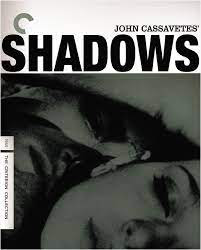
Shadows (1959)


Shadows, the debut film by actor/director John Cassavetes, is considered a landmark in American independent cinema, Cassavetes was on the vanguard New York filmmakers during the 1960s fashioning an alternative to Hollywood movies. 

The moody black and white atmosphere of the film follows a collage of characters shifting between aimlessness and ennui in the city. Propelled by Jazz music and the Beat Movement, they shuffle along the fringes of intellectual and artistic life. 

A sad love story shapes the narrative of Shadows. Complexities of race and identity are also woven into the film. Lelia (Lelia Goldini) lives with her two brothers Hugh (Hugh Hurd) a jazz singer and Ben (Ben Carruthers) an aspiring writer. Leila is uncertain about what she wants in life and worries about falling behind and aspires to attend college. At a literary party she meets aspiring intellectual Tony (Anthony Ray) who seduces her, but then bails on the relationship for racist reasons.

Cassavetes famously worked out the framework of Shadows through improvisation exercises with the cast. Technical and logistical setbacks extended the shooting of the film, additional scenes were also shot after the premiere was poorly received. 

While the improvisational approach feels awkward at first, as the film unfolds the line between fiction and non-fiction blur. By the end, the documentary effect is vivid.

Shadows would cast a wide legacy in the coming decades, especially on New Hollywood filmmakers. Scorsese and Altman immediately come to mind. The realist and film noir style can also find in the French New Wave, especially in Godard's 1960 film Breathless. Cassavetes and Godard set their films in urban environments and relied on character instead of narrative to shape the style.  

Monday, November 28, 2022

Wild Strawberries (1957)


In some ways the inverse of Frank Capra's It's A Wonderful life (although both sort of end up at the same place), Ingmar Bergman's Wild Strawberries follows Professor Isak Borg (Victor Sjostrom) as he journeys to accept a lifetime achievement award. Aging and near the end of his days, he reflects on the regrets of his life during the trip while interacting with fellow travelers along the way. Kurosawa's Ikiru deals with similar subject matter, but takes a more sociological approach to mortality, avoiding the troubled theology of Bergman, yet both films never fail to put one in a reflective state of mind, regardless of age.

Western culture romanticizes youth as the time to do everything and have lots of fun. Possibilities look endless at age 21, yet for anyone who's 21, that can be both exciting and daunting. We never know the consequences of our decisions until we have the benefit of looking back with hindsight. In the film, septuagenarian Professor Borg is asking questions like: What kind of person was I? What were my mistakes? Why did I not learn from them? Why am I full of regret?

In dream sequences, Isak relives moments of unrequited love and scenes from his unhappy marriage. His wife came to despise him and carried on affairs. The present and past are merging in some ways. Accompanying him on the trip is his daughter-in-law Marianne (Ingrid Thulin) who grows to have a grudging respect for Isak and even confides in him about her own issues with his melancholy son Evaid (Gunnar Bjornstrand), also a doctor.

Mortality, a recurring theme in many Bergman films, is looked at from a variety of perspectives here. Evaid is chronically depressed and despairs of his own existence, even walking out on Marianne after she reveals she's pregnant because he has no wish to bring a child into the world. A touch of despair is infecting all the characters. 

Along the way they pick up three young hitchhikers. The two men in the group debate the existence of God and even come to blows and compete for the affection of their female companion. Later, they encounter a bickering middle aged couple, a shadow of Isak's own marriage. 

Bergman is expressing a harsh truth: Regrets are inevitable as we age. Despite Isak's successful career as a doctor and scientist, his personal life has been a disaster resulting in grief and loneliness in his old age. Questions of whether he would've been happier with this person or had devoted more time to his family no longer matter. Approaching 40 when he wrote the film, Berman was musing on whether the "What ifs?" will consume us as the end nears. I suppose so, and there's really no way around it except by how one chooses to deal with it.

"Arid" is word that keeps popping up lately. Those with a religious perspective often use the term to describe the secular worldview, but it goes both ways. One of the hitchhikers wants to be a clergyman, an ambition his companions find quaint. Preaching a theology in a world of rapid social and technological change, informed by a catastrophic century simply offers a solution among many, at worst a pitiful nostalgia for a past that never existed. Turning to conventional religion ultimately involves not leaps of faith, but flights of fancy. 

Wild Strawberries resolves itself by, to quote Lincoln, turning to the "mystic chords of memory." The professor thinks back to moments of his childhood to assuage his regrets and fears. Many poets have offered a similar prescription to despair, but few films have expressed the notion in such a brave and unvarnished way.